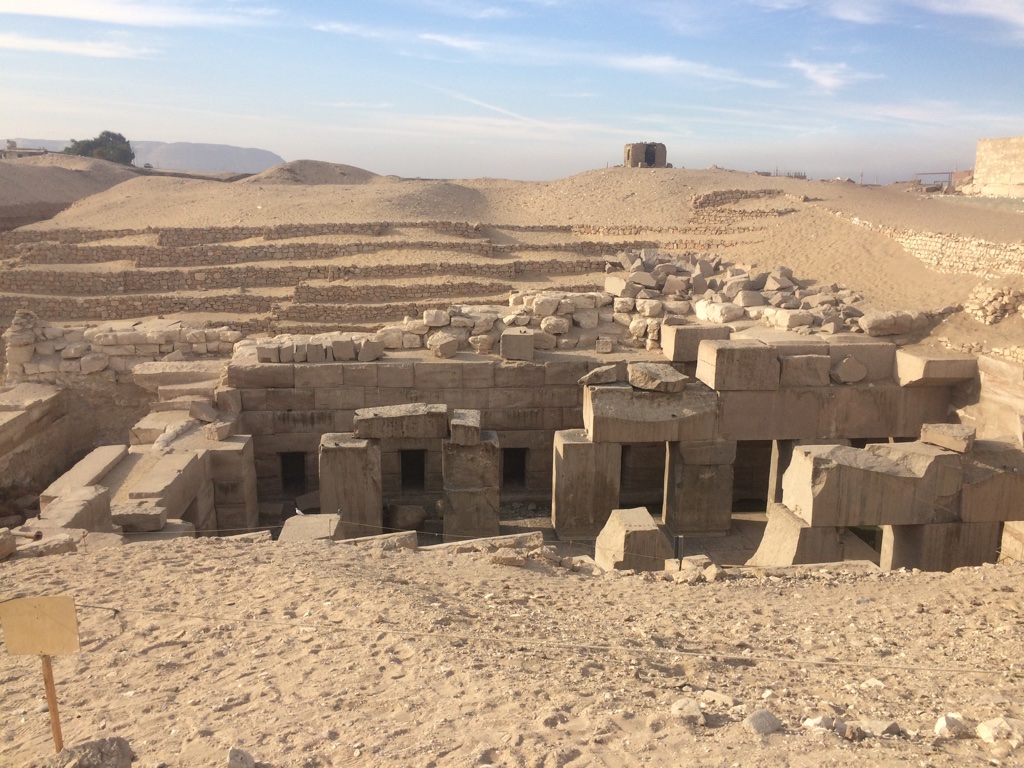
Far from the busy, modern city of Cairo there is a small village in the Egyptian Countryside known as “Abydos”.
These days, Abydos is a small community surrounded by farmland and date palm trees.
For some of the first Pharaohs, Abydos was a royal cemetery and launching place for the journey into the Eternal Afterlife.
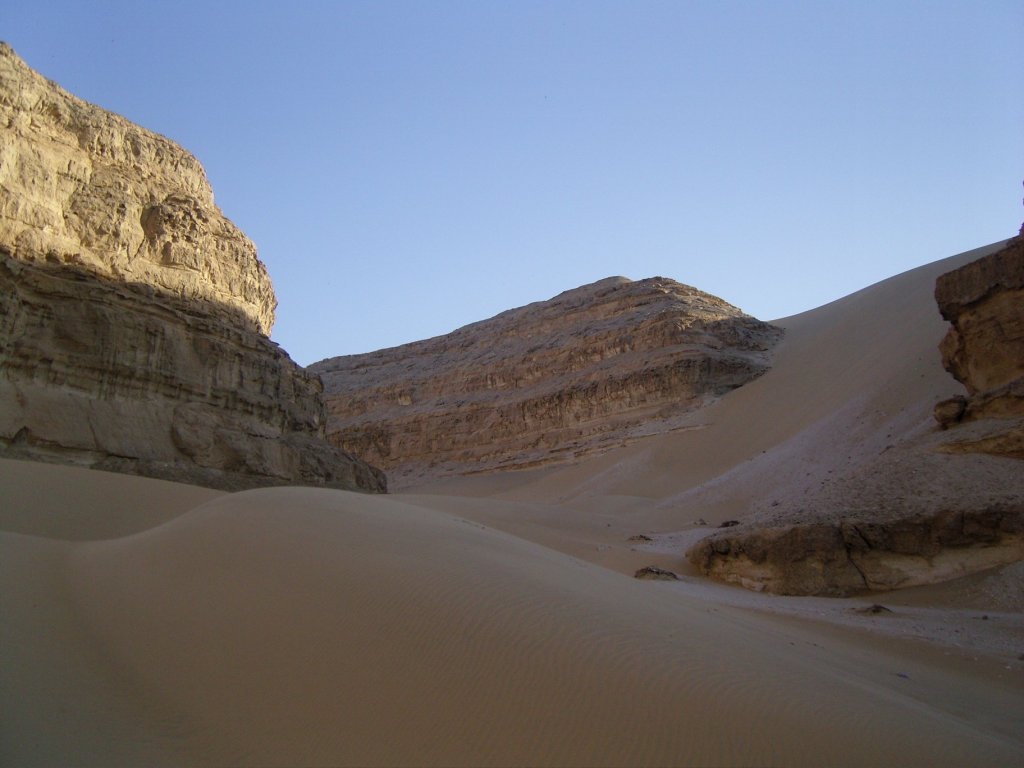
In Abydos, on the western horizon, there are natural cliffs, which rise above the village.
In a natural break on the Cliffside, there is a ramp of sand, which descends from the desert plateau to the river valley.
This natural ramp of sand, called “the gab” or “the gap”, is where the ancients believed a person’s soul could more easily enter the eternal afterlife.
Ancient people believed that Abydos was a gateway to the afterlife, and that their soul would have an easier time reaching the other side if their bodies were buried nearby.
In Abydos, there is an ancient temple in the center of town.
The temple was built by the order of Pharaoh Seti the 1st, in about 1300BCE.
The temple was sacred to the ancient people that used to live there.
It was the regional center of culture, religion, medicine, and record keeping for hundreds of years.
The sandstone walls, columns, and ceilings were all meticulously decorated with carved, painted images that are meant to tell stories from ancient times.
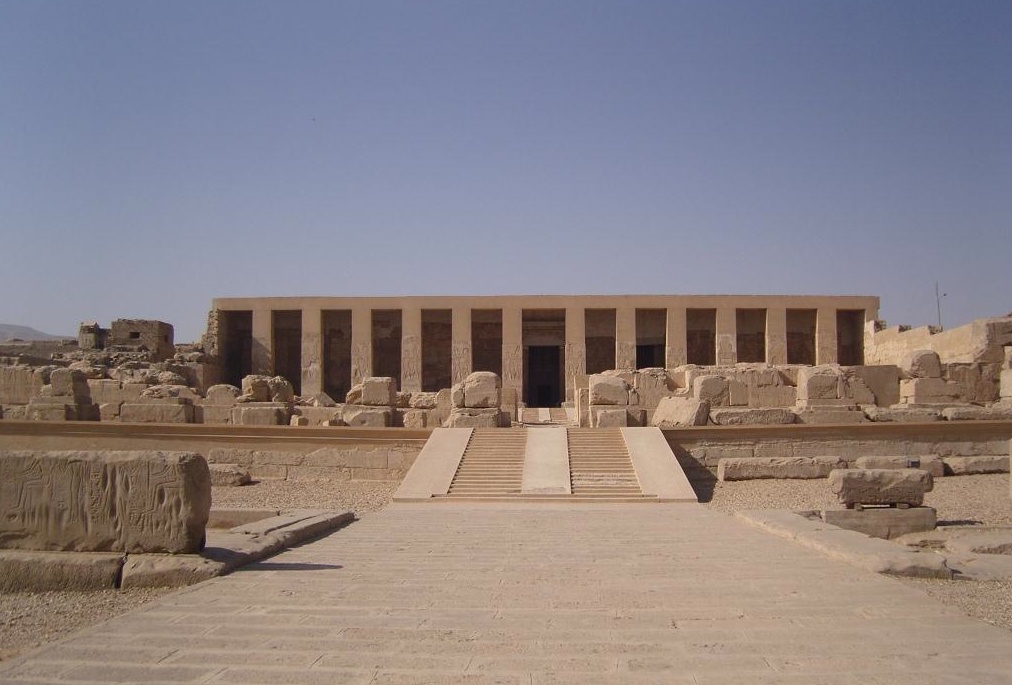
The temple of Seti the 1st is different from other Ancient Egyptian temples because it is dedicated to several Ancient Gods, as opposed to the usual one deity per temple.
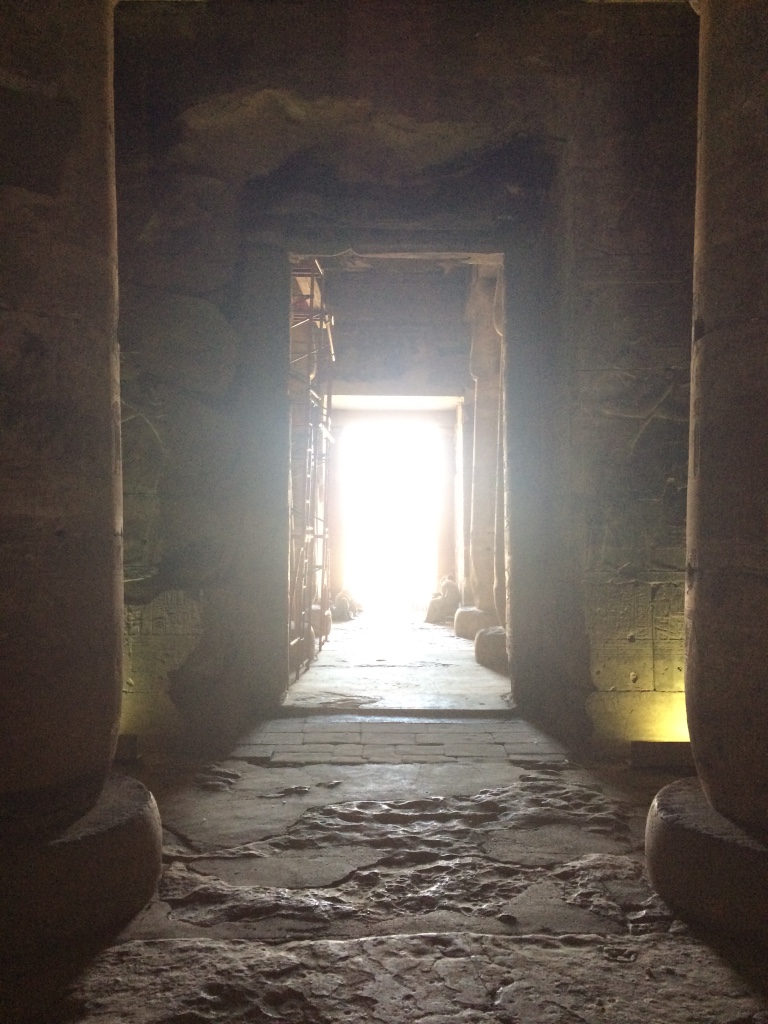
The temple has several sacred rooms, each dedicated to the worship of an Ancient Egyptian God.
These rooms, which are now open to visitors, were considered very holy places and only priests of the temple were allowed entrance for a very long time.
Directly behind the temple of Seti, there is a mysterious ancient temple known today as “the Osirion”.
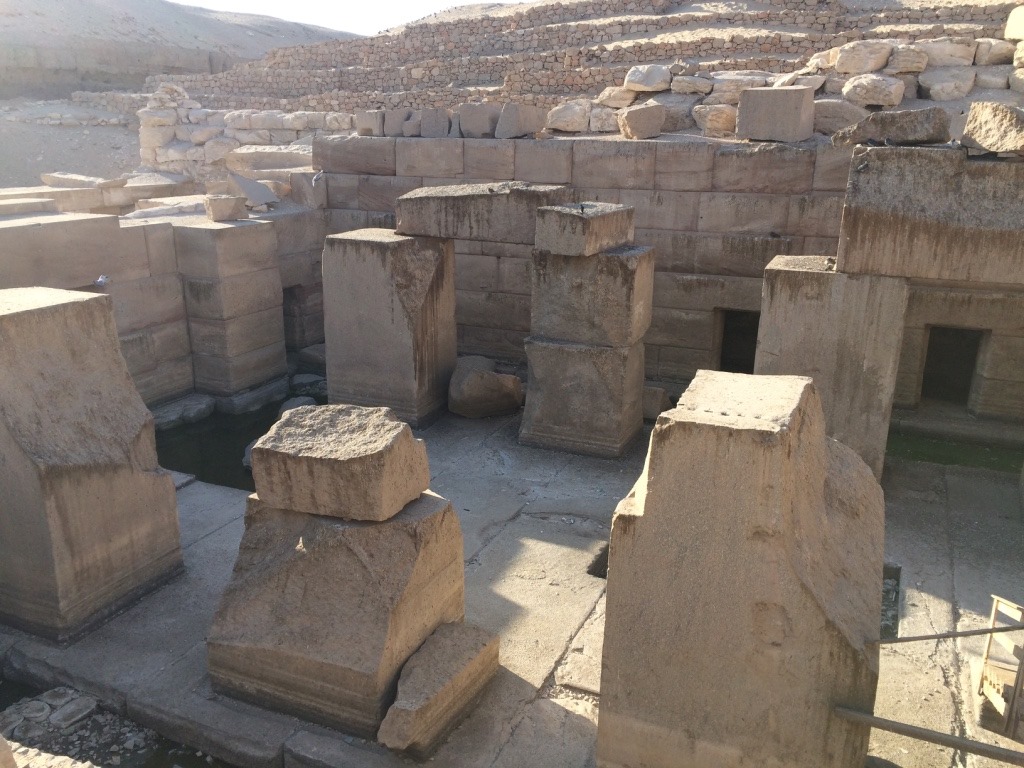
The Osirion is a very unique temple.
It was excavated in modern times by a team of archaeologists named Margaret Murray and Flanders Petrie in 1902-1903.
It is an anomaly in Egyptology, and its origin is mysterious and unknown.
The temple is found sunken into the ground, about 8 meters below the floor level of the temple of Seti.
The temple was built of massive granite blocks, which were much larger, heavier, and harder than the sandstone blocks used to build the temple of Seti.
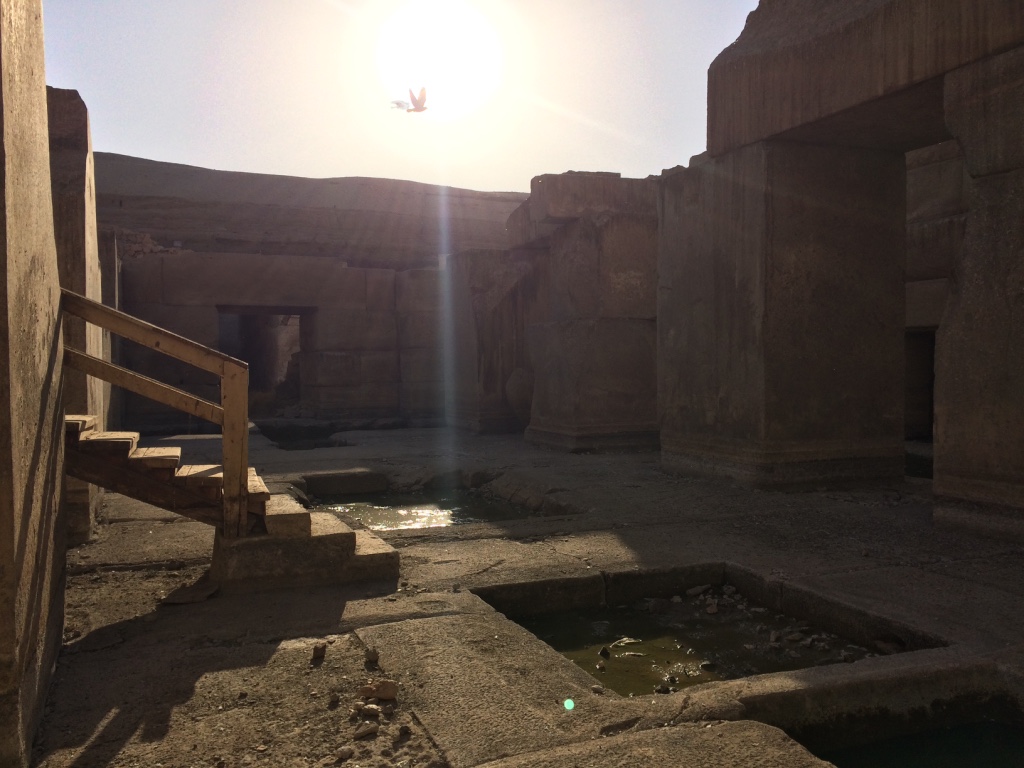
A unique feature of the building is a natural spring of freshwater that flows into the Osirion and makes a small stream of water that surrounds a central stone floor.
Also, there are several underground rooms, which connect through small tunnels to the Osirion.
It is the hypothesis of many, that the Osirion was built many thousands of years before the Temple of Seti, which would make it one of the oldest known Ancient temples in Egypt.
According to the ancient myth of Isis and Osiris, his brother Set cut Osiris’ body into pieces and scattered the pieces across Egypt.
His head was supposedly buried in Abydos.
The myth led to Abydos becoming the center of worship of the ancient god Osiris for many thousands of years.
Ancient peoples would pilgrimage to Abydos to offer prayers to Osiris and to seek healing and wisdom.
Every year, the temple priests would host a festival to celebrate Osiris and people from all over the ancient world would attend.
One of the more popular events at the festival was a theatrical performance of the story of Isis and Osiris, which ends with Horus defeating Set in an epic battle.
The battle scene took place on a boat, in the middle of a sacred lake near the temple of Seti.
~~~~~~~~~~~~~~~~~~~~~~~~~~~~~~~~~~~~~~~~~~~~~~~~~~~~~~~~~~~
Stargates are places, which have special features that are known to help induce astral or out-of-body experiences.
An initiate in meditation can learn how to astral project, or in other terms, consciously leave their physical body and travel or explore “places” using their mind.
An experienced meditator can perform mystical feats like astral projection in any environment, however certain environments can make it easier to perform.
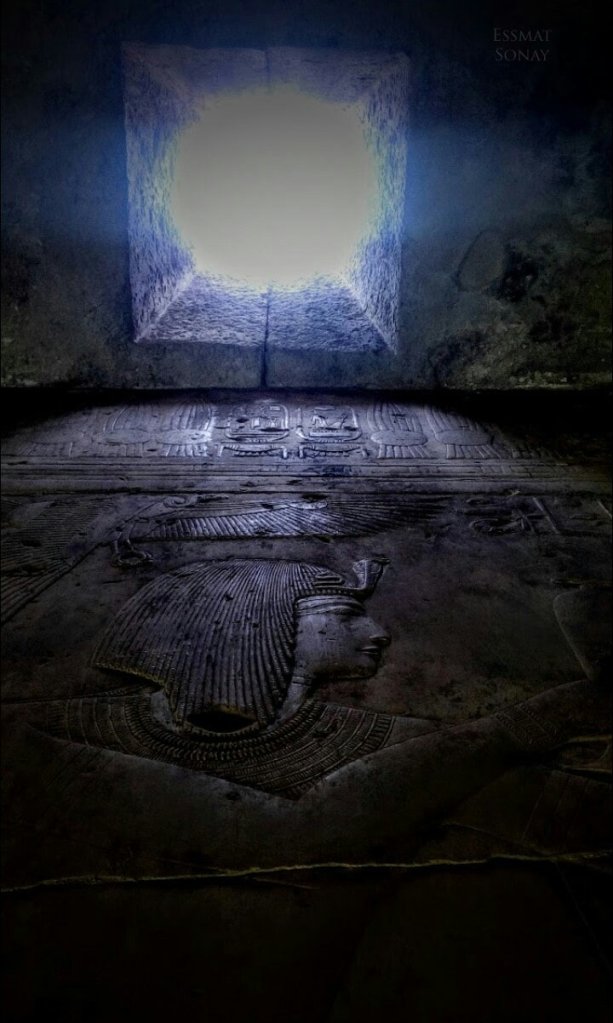
Certain Ancient temples in all corners of the Earth could be called Stargates.
Some ancient temples were very thoughtfully designed and crafted in such a way that their non-physical features, like acoustics, energetics, and lighting, are effective tools for stimulating mystical experiences in humans.
The Osirion is a temple from pre-dynastic Egypt and it was designed by it’s architects to be a highly effective stargate.
The decision to build the Osirion in Abydos was surely related to the natural stargate in the cliffsides, “the Gab.”
The Osirion has a magical and otherworldly energy to this day.
Perhaps one day soon, more open-minded historians and Egyptologists will openly discuss the mystical and spiritual functions of the Osirion, and not fear criticism from their colleagues.
After being buried in sand for thousands of years, the mystery of the Osirion deserves to be remembered and appreciated as an extraordinary example of an ancient, advanced, pre-dynastic society.
 The Fire Within